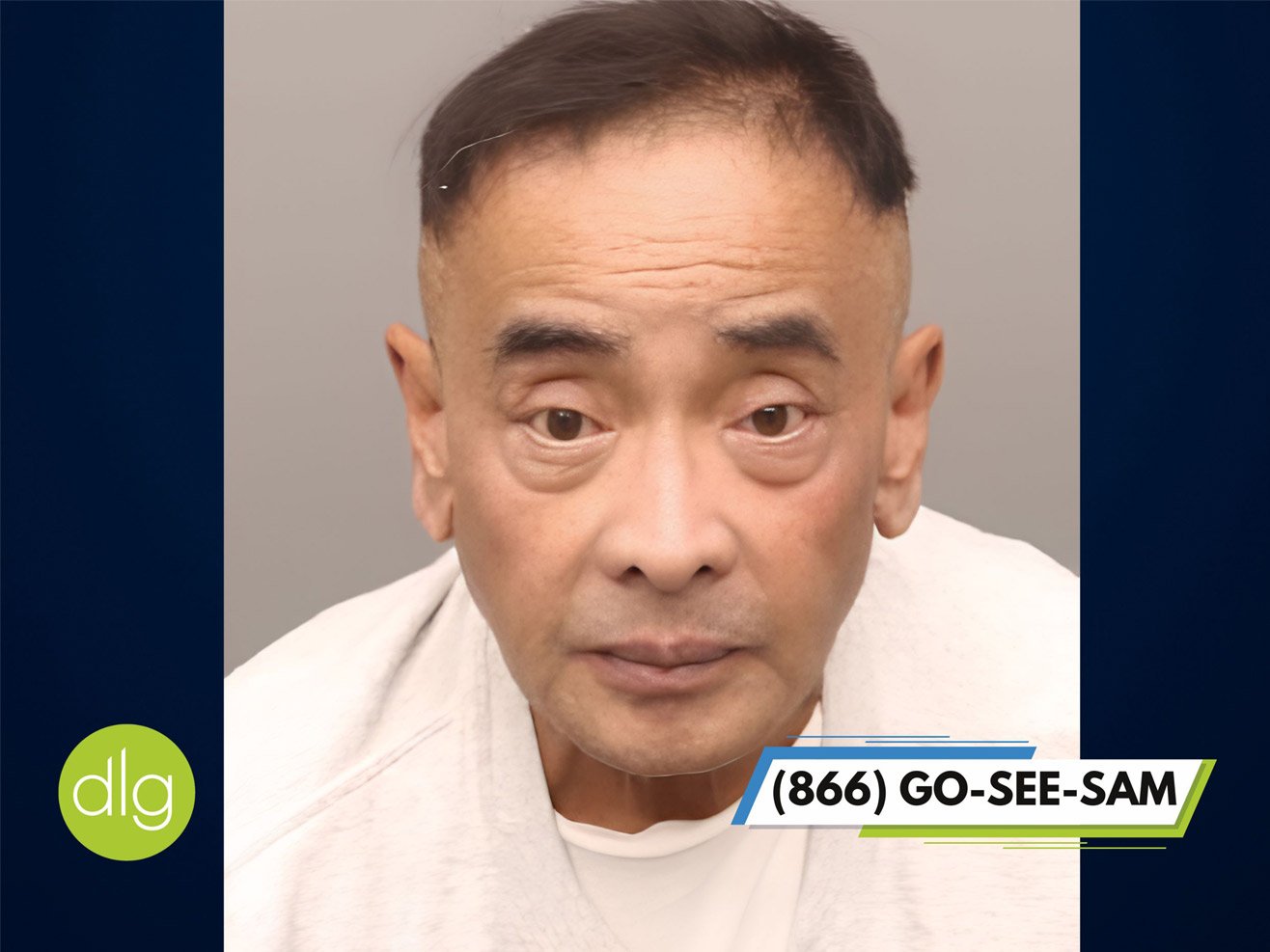
June Richard Lee of Hemet has been arrested on multiple sexual abuse charges involving a dependent adult at a private Eastvale care facility. Officials believe that the suspect, who also used the name Richard Bautista, may have victimized others at nursing home facilities.
Quick answer: On August 14, 2026, the Riverside County Sheriff’s Office arrested 62-year-old June Richard Lee of Hemet, who was also using the name Richard Bautista, on suspicion of lewd acts on a dependent adult, sexual battery, and forced oral copulation at a private care facility on the 6000 block of La Mesa Street in Eastvale. At least two victims have been identified and the case remains open, according to a report from KTLA. If your loved one lived there, you may be able to bring a civil claim for financial damages against both the accused employee and the facility that employed him.
Contact Dordulian Law Group now at (866) GO-SEE-SAM for your free and 100% confidential case review.
When a family places a vulnerable adult in a nursing home of extended-care facility, they hand over the most basic responsibility one person can give another: keep them safe when they cannot protect themselves. The sexual abuse allegations against June Richard Lee of Hemet, who worked at a private Eastvale nursing home facility, describe negligence and a failure to provide a duty of care. A caregiver stands accused of sexually assaulting residents who depended on him for daily care, and roughly fourteen months passed between the first report and an arrest.
If you recognize the facility, the street, or the name, you are not overreacting by asking questions. Below is what has been reported, what California law says about dependent adults’ rights, and what you can do now. Our Los Angeles nursing home sexual abuse lawyers handle these cases across California, and every case review is free, private, and without any obligation.
According to the Riverside County Sheriff’s Office and news reports, the case unfolded across more than a year.
The investigation is ongoing. Authorities ask anyone with information to contact Investigator C. Lewis at (951) 955-1700 or dispatch at (951) 776-1099. Mr. Lee is presumed innocent unless and until convicted.
Why this matters to other families: Investigators found a second victim only after a specialized unit reopened the case nine months later. In institutional abuse cases, the victim count at arrest is very often lower than the number who eventually come forward. If your loved one lived at this facility at any point, ask questions now.
One detail from the sheriff’s release deserves particular attention: authorities stated that Lee was also using the name Richard Bautista.
California requires facility personnel with resident contact to clear a criminal background check through Live Scan fingerprinting, and licensed operators must verify that a hire is who they claim to be. When an employee works under a name other than his legal name, serious questions follow:
Those questions are not academic. In a civil case they go directly to whether the facility itself was negligent, separate from anything the employee is accused of doing. A screening process defeated by a different name is not a functioning screening process.
California draws a specific legal line around adults who cannot fully protect themselves, and that line unlocks stronger remedies.
Under California Welfare and Institutions Code section 15610.23, a dependent adult is generally a person between 18 and 64 whose physical or mental limitations restrict the ability to carry out normal activities or protect his or her own rights. That includes people with developmental disabilities, cognitive impairment, serious mental illness, or significant physical disabilities, as well as adults admitted as inpatients to a 24-hour health facility.
An elder is any California resident age 65 or older. Many care facility residents qualify, and California’s elder sexual abuse and assault protections apply on top of general personal injury law.
The practical significance: when a caregiver engages in sexual conduct with a dependent adult or elder resident, the resident’s apparent agreement is not a defense. California law treats caretakers as holding a position of trust and authority, and treats the facility as owing a heightened duty to residents who cannot advocate for themselves.
Yes. A criminal prosecution and a civil lawsuit are separate proceedings, and one does not replace the other. The criminal case belongs to the state and aims to punish. A civil case belongs to the survivor and the family, and it aims at compensation and accountability.
The reported timeline is exactly what a civil attorney examines. A complaint in June 2025 followed by an arrest fourteen months later invites a direct question: what did the facility know, what did it do, and who else was exposed in the meantime?
Many dependent adults cannot report abuse in words. Some have limited speech, cognitive impairment, or a lifetime of being taught to comply with caregivers. Behavior is often the only signal a family gets.
You do not need proof before you act, and reporting a concern is not an accusation. Call the sheriff’s investigator at (951) 955-1700, contact Adult Protective Services, and speak with a lawyer before the facility’s risk management team speaks with you.
Every case differs and no lawyer can promise an outcome. Civil claims arising from abuse in a care setting commonly seek:
Beyond money, a civil case delivers what the criminal system rarely does: documents. Personnel files, background check records, prior complaints, staffing schedules, and internal incident reports become discoverable. That is often how a family finally learns what happened and how long it went on. See how we handle nursing home and care facility abuse claims.
California generally gives adult survivors of sexual assault significantly more time than an ordinary personal injury claim. Under California Code of Civil Procedure section 340.16, a civil claim for damages caused by adult sexual assault must generally be filed within 10 years of the last act, or within three years of the date the survivor discovered or reasonably should have discovered an injury resulting from the assault, whichever period is later.
Several complications can shorten that window. Claims involving a public entity carry a much shorter government claim deadline. Video, staffing records, and visitor logs are often retained only briefly and can disappear while a family waits.
Do not try to calculate your own deadline. A phone call costs nothing and takes minutes. Missing a filing deadline permanently ends a claim no matter how strong the facts are.
This is usually the first question families ask, and it is the right one. California courts routinely allow survivors to proceed under a pseudonym such as Jane Doe or John Doe. Protective orders can restrict access to medical and psychiatric records, and most of these cases resolve through confidential settlement rather than public trial.
Where a resident lacks capacity to file personally, a spouse, adult child, conservator, or court-appointed representative may act on their behalf. If you are unsure whether you have standing, that is one of the first things we sort out at no cost.
These are not ordinary personal injury cases. They require an attorney who understands how sexual assault is investigated, how offenders operate inside institutions, and how facilities defend themselves.
Sam Dordulian is a former sex crimes prosecutor and Deputy District Attorney for Los Angeles County. He spent years putting sexual predators in prison before representing survivors in civil court. He has secured more than 100 jury trial victories, maintains a 98 percent winning record, and has recovered more than $150 million for clients.
That background changes how a case is built: knowing what investigators look for, how to work alongside an open criminal case, and how to assemble the record that establishes what a facility knew and when.
Dordulian Law Group built its Sexual Assault Justice Experts(SAJE) team to support survivors. Rather than simply having one attorney fighting in your corner, the firm provides each client with access to four tiers of in-house support – an expert litigation team, a private investigator, victim advocates, and a licensed clinical therapist are all part of the client experience at Dordulian Law Group.
Dordulian Law Group handles sexual abuse cases on a contingency-fee basis. You pay nothing unless we recover a financial damages award for you. Consultations are also free and confidential.
The Riverside County Sheriff’s Office arrested June Richard Lee, 62, of Hemet, who was also using the name Richard Bautista, on August 14, 2026. He was booked into the Cois Byrd Detention Center on suspicion of lewd acts on a dependent adult, sexual battery, and forced oral copulation. He is presumed innocent unless convicted.
Yes. A civil claim is separate from the criminal prosecution and can be filed while it is pending. Starting early is often an advantage, because staffing records and video footage may not be preserved indefinitely.
That is common and it does not prevent a claim. These cases are frequently proven through medical evidence, documented behavioral change, facility records, prior complaints, and staff testimony.
California generally allows ten years from the last act or three years from discovering an injury from the assault, whichever is later. Deadlines vary, so have an attorney evaluate your timeline.
No. Consultations are free and confidential, and cases are handled on contingency. You pay nothing unless there is a recovery.
If your family member lived at the care facility on La Mesa Street in Eastvale, or anywhere you suspect a caregiver crossed a line, you deserve answers and the opportunity to secure the justice you and your family deserve.
Contact Dordulian Law Group now for your free and confidential consultation with the SAJE Team. Call (866) GO-SEE-SAM or visit dlawgroup.com. We serve Riverside County, the Inland Empire, and all of California.
Call now: (866) GO-SEE-SAM | dlawgroup.com/sexual-abuse-lawyers | Free consultation. No fee unless we win.
Author

"*" indicates required fields